Life · 紫微斗数
Your Mental palace is inner weather
Three practice postures from 天府, 天同, and 天梁
Three practice postures from 天府, 天同, and 天梁 in the Mental palace (福德宫). Borrow abundance, present-moment release, and resilient reference. Practice the posture even without those natal stars.
A Zi Wei Dou Shu (紫微斗数) reading is not only about what will happen to you. One of the useful parts is how you are wired to think when life gets hard.
I pay special attention to the Mental palace (福德宫). This is where the chart speaks about inner weather: how you process stress, setbacks, and the stories you tell yourself after something goes wrong. Some star patterns here often read like a natural “anti-aging” for the mind (a metaphor for recovery speed, not medicine or fate). People with them often move on quickly. When you move on quickly, you stay lighter. You feel happier. From the outside that can look like smoother luck, mostly because they waste less life on replay.
You may not have these stars in 福德宫. That does not close the door. You can still practise how a person with these stars thinks and acts. The chart shows a temperament. Practise can borrow one. Borrowing a posture is training. It is not the same as having the star natively, and the rest of the chart still matters.
Here are three I like when they sit in 福德宫: 天府 (Tian Fu), 天同 (Tian Tong), and 天梁 (Tian Liang).
天府 in 福德宫: think in abundance
天府 is classically a treasury/storage star; in everyday language people hear it as wealth or abundance. In 福德宫, many charts with a healthy 天府 here show thinking as if life already has room in it.
When they face an obstacle, or when they lose money, the inner line is not always “this ruined me.” It can sound more like: that was a small amount. I take it as tuition money. When the star is bright and unburdened, the loss sits inside a larger sense of having enough, so they can release it and move on. When the same star is dim, piled with 煞, or hit by 化忌, the flavour can flip toward clinginess or scarcity anxiety instead. The posture we practise is the healthy read, not every possible chart.
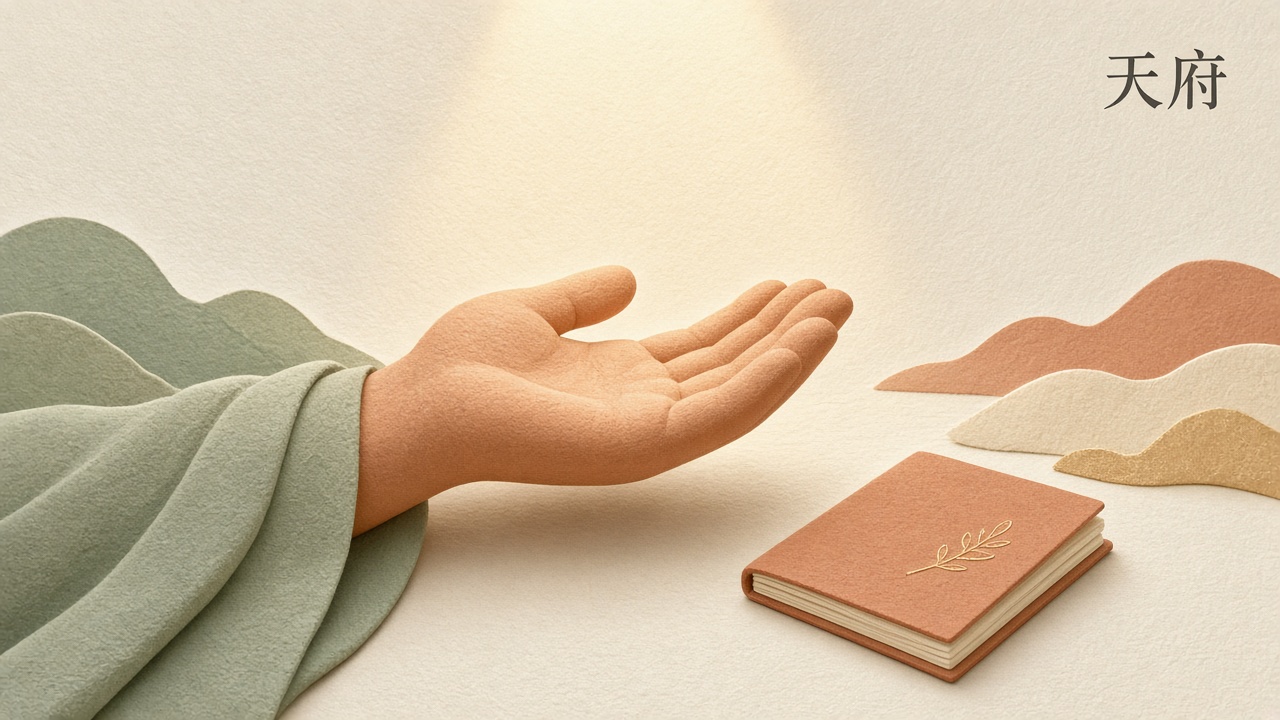
What we can practise: when something costs you, ask what tuition it bought, then put the rest down. Abundance is a thinking habit before it is a bank balance.
天同 in 福德宫: think like a small kid
天同 in 福德宫, when well placed, often thinks the way a small kid does. Kids live in the moment. They cry, then they play. They do not hold a three-year grudge about a broken toy.
People with this flavour can forget what happened more easily. They live more harmoniously with whatever day they are in. The setback happened. Then the next moment arrives, and they meet that moment instead of replaying the last one. The shadow to watch is using “live in the moment” to dodge what still needs solving.
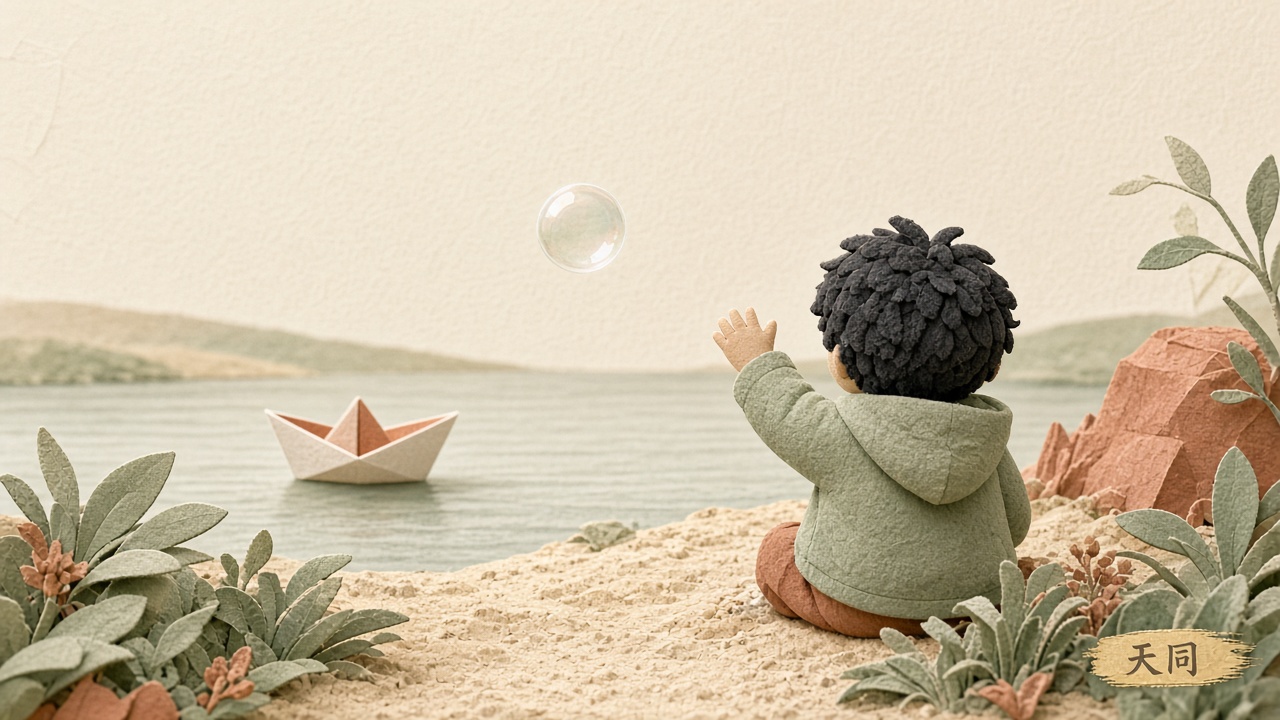
What we can practise: shorten the replay. Feel it, name it, then return to this hour. Harmony is often less about perfect conditions and more about not dragging yesterday into every room. Release is not the same as avoidance.
天梁 in 福德宫: tough seasons as proof, not prophecy
天梁 in 福德宫 often belongs to people who have walked through hardship. Their edge can be problem-solving under pressure. Because they have resolved hard things before, a new hard thing does not automatically mean collapse.
The inner line can sound like: I have been through harder situations than this. That memory is not bravado for its own sake. It is a reference point. Tough periods become evidence that they can resolve again, so they can move on without freezing. When this star is heavy or troubled, the same palace can lean into worry or carrying too much alone, so the practise is resilient reference, not hardened numbness.
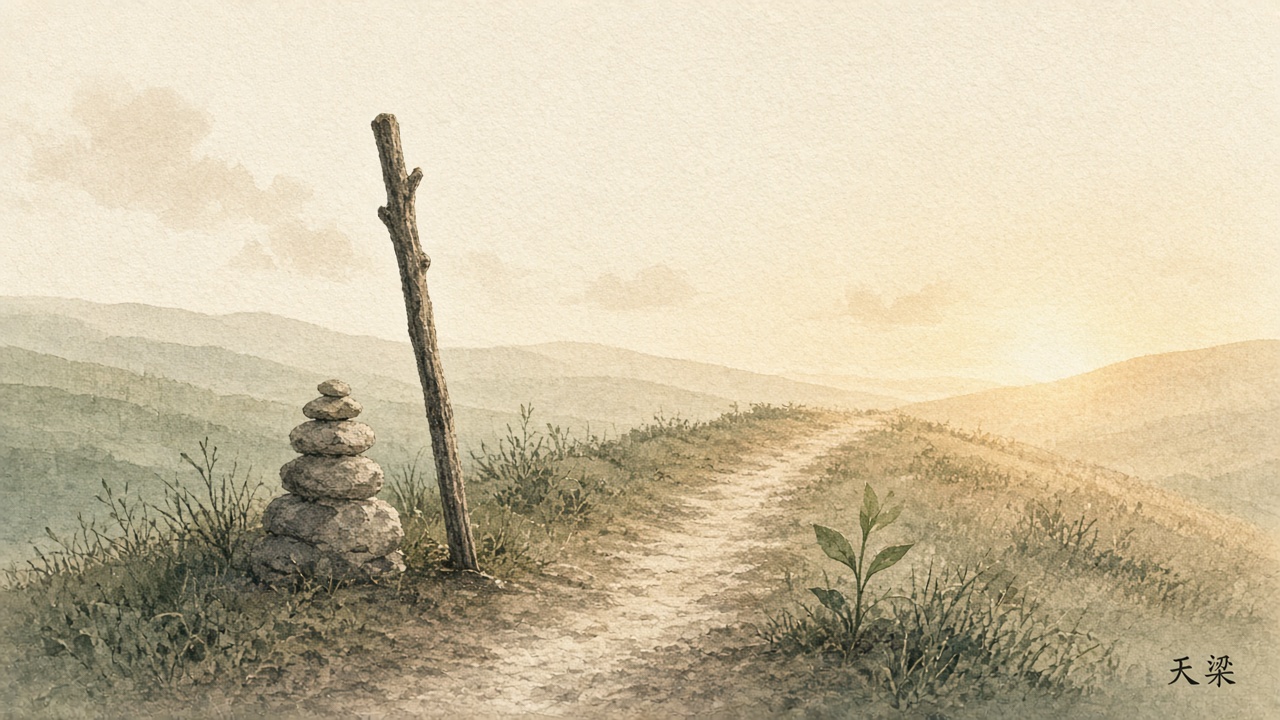
What we can practise: keep a short list of harder seasons you already survived. When a new problem shows up, place it next to that list before you declare it the end of the story.
The learning, not the label
ZWDS can name which of these flavours already sit in your 福德宫. The deeper lesson is portable.
Move on quickly, and you stay happier. Stay happier, and life often feels more workable. You do not need the exact stars to borrow the posture: abundance thinking (天府), present-moment release (天同), or “I have handled worse” problem-solving (天梁).
A public article names flavours. A real reading still checks brightness, transforms (including 化忌), other stars in the palace, and the wider chart (三方四正) before treating any of this as your fixed nature. Practise borrows a posture. It does not rewrite destiny, and one palace does not lock a year or a life story.
A reading shows the pattern. Practise is how you wear it on purpose.